UBanCS colloquium — Ubangi, Bantu and Central Sudanic: Mosaics of Languages, Genes, and Material Cultures in Central Africa

Submission Deadline: 28-Feb-2026

As part of the ERC-funded CongUbangi project, this colloquium aims at bringing together scholars from different disciplines interested in Ubangi, Bantu and Central Sudanic languages and language speaking-communities in northern Republic of Congo, southern Central African Republic and northern Democratic Republic of Congo. Spanning multiple ecozones within the Congo rainforest, this area is home to an intricate demographic configuration where Bantu (Niger-Congo) and Central Sudanic (putative Nilo-Saharan) speaking groups are interspersed with Ubangi groups. The internal relationships among groups lumped under the label “Ubangi” are unclear. While their individual Niger-Congo affiliation looks promising, this is based on very little evidence. Linguistic hallmarks of this area include multidirectional language shift, contact and linguistic enclaves.

The region’s linguistic diversity is matched with human genetic diversity. The few available studies suggest significant genetic differentiation among populations also having distinct cultural and/or linguistic backgrounds, but genetic sampling is insufficient compared to other parts of Africa, especially among Ubangi and Central Sudanic speakers. Further, nothing is known about admixture patterns which might reveal the dynamics of early contacts in the region.

Archaeological research within the region has been sparse, leaving large gaps in the history of pre-colonial populations and population movements. While a deep-seated hypothesis deprived of linguistic or archaeological evidence argues that Bantu were the first to settle in this region, the astonishing geographic fragmentation of Ubangi subgroups such as Mundu-Baka and Mbaic and of Central Sudanic subgroups such as Sara-Bongo-Bagirmi, suggests that these might descend from the earliest layers of occupation in the region. Likewise, ethnoarchaeological data has revealed a continuity between Early Iron Age communities and the Ubangi speakers that inhabit the region today, suggesting the possible antiquity of these groups in the region.

With this framework in mind, we welcome contributions from linguistics, genetics, archaeology and related fields dealing with:
– Phonological and/or morphosyntactic accounts of yet undocumented or poorly known languages of the region
– Language contact phenomena (esp. borrowings and vocabulary shared across different language families)
– Linguistic features spreading areally through contact
– Enclaved varieties (language islands)
– Language shift
– Language stratigraphy
– Reconstruction (and comparison) of proto-languages of Ubangi, Bantu and Central Sudanic subgroups
– Methods and challenges with internal classificatory attempts within Ubangi, Bantu and Central Sudanic
– Population genetics
– Metallurgy, including iron production
– Monumentality of Bouar and adjacent regions
– Pottery analysis (e.g., stylistic, formal, and petrology)
– Lithic studies of Late Stone Age (and/or earlier) materials
– Population movements, including the Bantu Expansion
– Ethnography (e.g., hunting/foraging, pottery and iron production)
– Interactions between autochthonous foragers and pottery-producing communities

Deadlines:
Abstract submission: Submit an abstract of maximum 500 words (excluding references and/or figures) in pdf format to ubancs@ugent.be by 28th February 2026

Notification of acceptance: 30th April 2026

For all questions, please contact the organizers at ubancs@ugent.be.

BantUGent/DiaLing research seminar with Bernat Bardagil: Argument marking patterns as a proxy for social contact in the Guaporé-Mamoré region of Amazonia

What? BantUGent/DiaLing research seminar
When? 12 December 2025
Where? Camelot, Blandijn, Campus Boekentoren
Time:
10.00: Bernat Bardagil – Argument marking patterns as a proxy for social contact in the Guaporé-Mamoré region of Amazonia
To what extent can we use a high-resolution comparative linguistics approach to open a window into human history when we lack tangible historical information? The Guaporé-Mamoré region, overlapping significant territory in the Bolivian and Brazilian lowlands, is one of the most linguistically and culturally diverse regions in the continent. In spite of that, we know extremely little about the history of a vast majority of the languages, and the indigenous nations who speak them, before the 20th century. In this talk I will discuss my ongoing research examining grammatical properties in order to triangulate historical information about the nations inhabiting of this area.
To join the meeting online via MS teams, please contact Nina van der Vlugt.

BantUGent research seminar with Alena Witzlack Makarevich (UBremen): Linguistic Repertoires of the Kusua of Semuliki Forest, Uganda

What? BantUGent research seminar
When? 28 November 2025
Where? Room 3.30 (Camelot), Blandijn
Time: 10.00
Alena Witzlack Makarevich (Bremen University)
Documentation and description of the linguistic repertoires of the Kusua of Semuliki Forest
In this talk Alena presents a recently launched language documentation and description project on the endangered Kusua language (D.22) spoken by a group of some 150 forest foragers. The group has been resettled multiple times in the last 30 years and currently resides in two settlements in the Bundibugyo district of western Uganda. In addition to providing the overview of the sociolinguistic situation the talk will present some tools and techniques the team adopted to manage this large-scale documentation initiative.


Alena WITZLACK-MAKAREVICH | Associate Professor | PhD | Hebrew University of Jerusalem, Jerusalem | HUJI | Department of Linguistics | Research profile

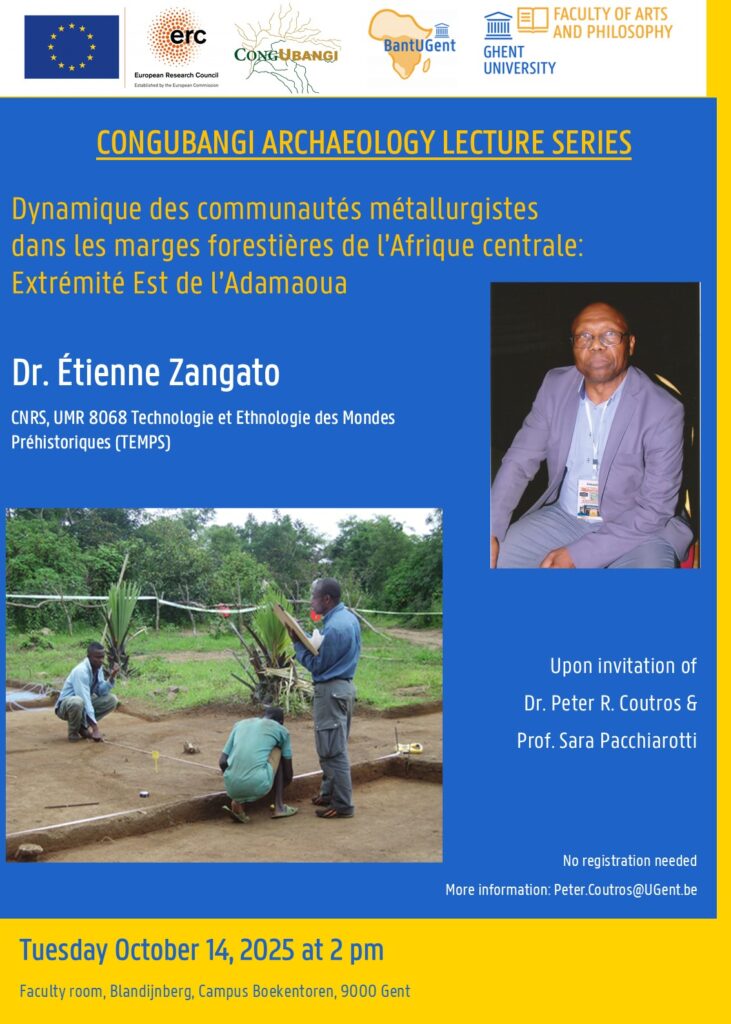
Dr. Étienne Zangato (CNRS)— Dynamique des communautés métallurgistes dans les marges forestières de l’Afrique centrale: Extrémité Est de l’Adamaoua (CongUbangi Archaeology Lecture Series)

Upon invitation of Peter Coutros and Sara Pacchiarotti, Dr. Étienne Zangato, affiliated with the Unité de Recherche Mixte 8068 Technologie et Ethnologie des Mondes Préhistoriques (TEMPS) at the Centre National de la Recherche Scientifique, in Paris, France, will give a talk titled Dynamique des communautés métallurgistes dans les marges forestières de l’Afrique centrale: Extrémité Est de l’Adamaoua. This is the first talk of the CongUbangi Lecture Series in Archaeology. The event is open to anyone interested. No registration needed. For more information, please contact Peter.Coutros@UGent.be.

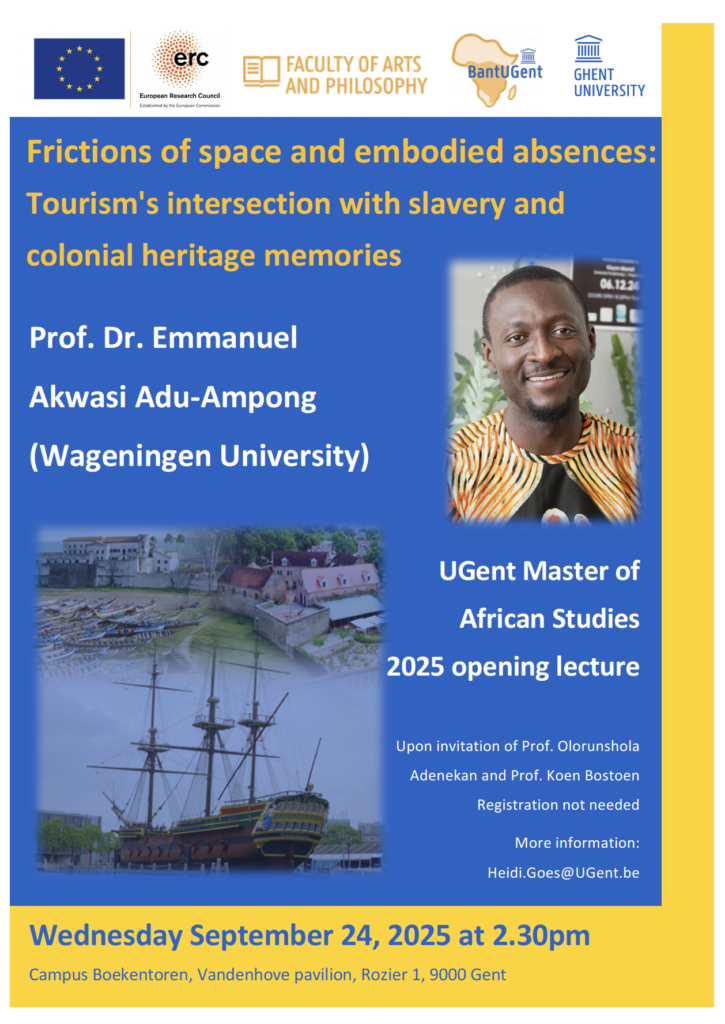
UGent Master of African Studies 2025 opening lecture

Upon invitation of Prof. Dr. Olorunshola Adenekan and Prof. Dr. Koen Bostoen, Prof. Dr. Emmanuel Akwasi Adu-Ampong (Wageningen University) opened the academic year of the UGent Master of African Studies program with a talk titled “Frictions of space and embodied absences: Tourism’s intersection with slavery and colonial heritage memories“. This talk was the joint opening lecture for the Master of African Studies courses “Literature, Media and the Arts in Central and Eastern Africa” and “Language, History and Identity in Central and Eastern Africa”.

A recording of the lecture and of the documentary film shown during the lecture can be found below the poster.

Lecture by Prof. Dr. Akwasi Adu-Ampong

Documentary “The Embodied Absence of the Past: tourism’s intersection with slavery and colonial heritage memories” by Prof. Dr. Akwasi Adu-Ampong

BantUGent research seminar on archaeology in Central African Republic with Henri Zana and Lucien Pierre Nguerede (UGent)

What? BantUGent research seminar
When? 30 June 2025
Where? Room 3.30 (Camelot), Blandijn, Campus Book Tower
Time: 14.00
Henri Zana -Données récentes des recherches archéologiques et ethnoarchéologiques sur la production de la poterie en République Centrafricaine
Lucien Pierre Nguerede -Résultats des récentes recherches archéologiques et ethnoarchéologiques sur la production du fer en République Centrafricaine
To join the meeting online via MS teams, please contact Paulin Baraka Bose (paulin.barakabose@ugent.be) or Nina van der Vlugt (nina.vandervlugt@ugent.be).

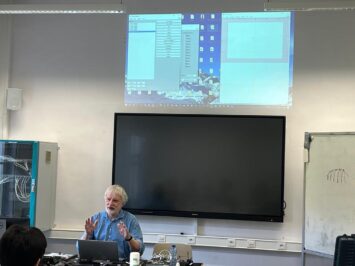
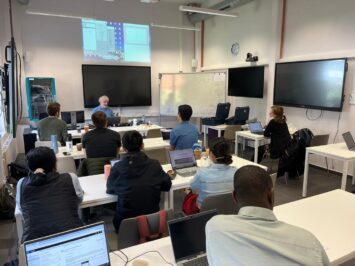
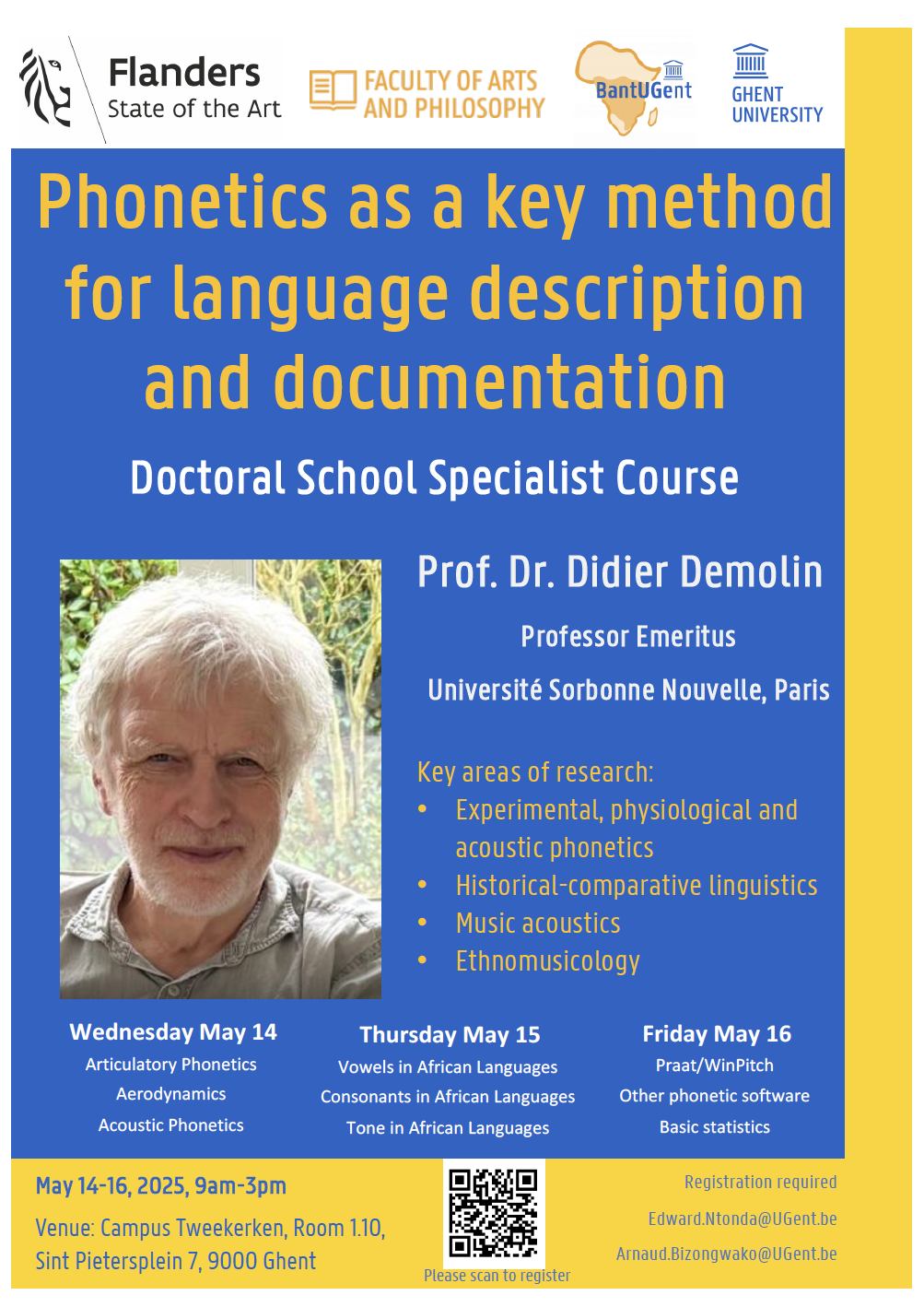
BantUGent Doctoral School Specialist Course “Phonetics as a key method for language description and documentation”

From May 14 until May 16, 2025, BantUGent is offering a three-day Doctoral School Specialist Course on “Phonetics as a key method for language description and documentation” taught by Prof. Dr. Didier Demolin (Université Sorbonne Nouvelle, Paris). Registration is required and can be done here until May 12 before midnight. This event is financed by the Doctoral School of UGent and the Flemish Government.