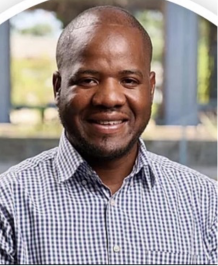
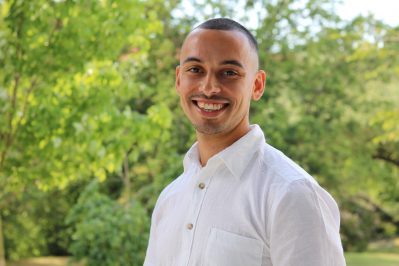
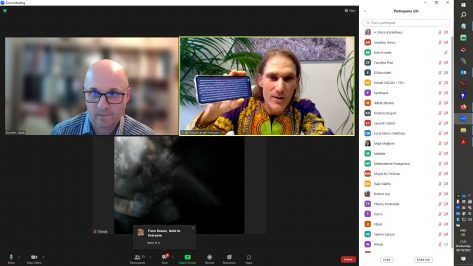
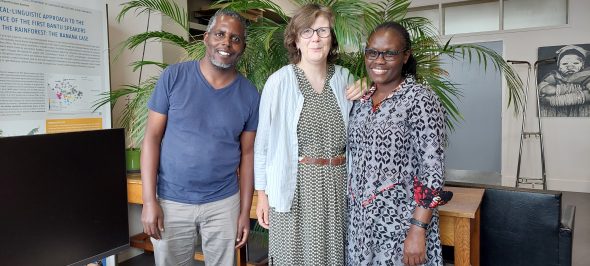
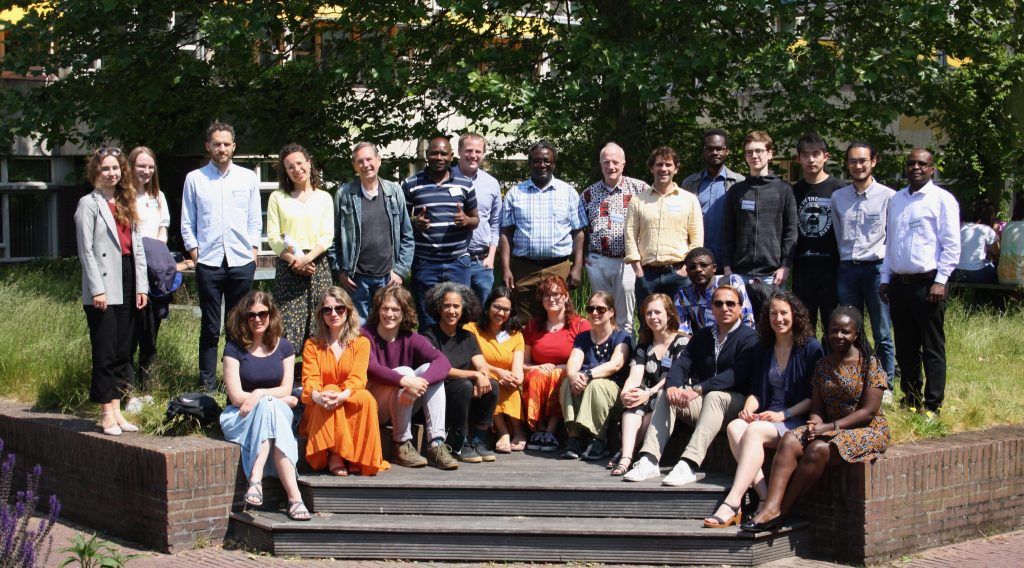
James Wachira and Jennifer Muchiri from Nairobi University visit UGent


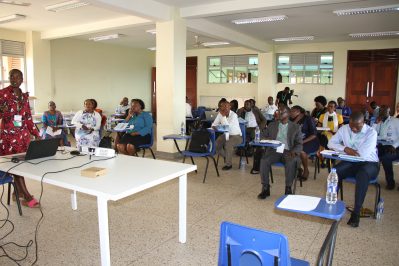
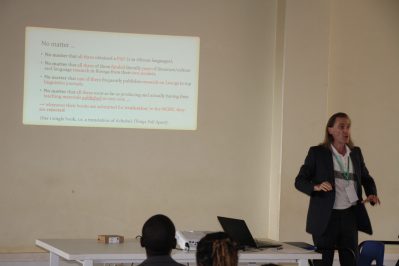
At the 3rd Conference of the Language Association of Eastern Africa, which was held at Makerere University, in Kampala, Uganda, on 15 and 16 August 2023, Dr. Minah Nabirye presented a paper titled ‘Made in Uganda’, and Prof. Gilles-Maurice de Schryver dealt with its counterpart: ‘Broken in Uganda’. While Minah focused on solutions to overcome bottlenecks in producing language materials for Lusoga, Gilles-Maurice took a more critical stance with three Lusoga case studies to point out the rampant kleptocracy at Uganda’s National Curriculum Development Centre (NCDC), which hampers any meaningful empowerment of the African languages.

Minah Nabirye: Made in Uganda

Gilles-Maurice de Schryver: Broken in Uganda

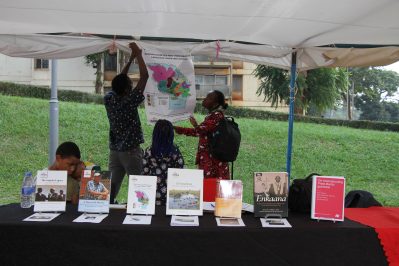
Menha Publishers at 3rd LAEA
In celebration of the conclusion of the Bantu Syntax and Information Structure project, a 2-day conference took place in Leiden on 8 and 9 June 2023 in hybrid format. BantUGent was represented with a talk by Manoah-Joël Misago†, Ernest Nshemezimana, Koen Bostoen & Sara Pacchiarotti on The applicative and the focalization of event location in Rundi(Bantu JD62).
`

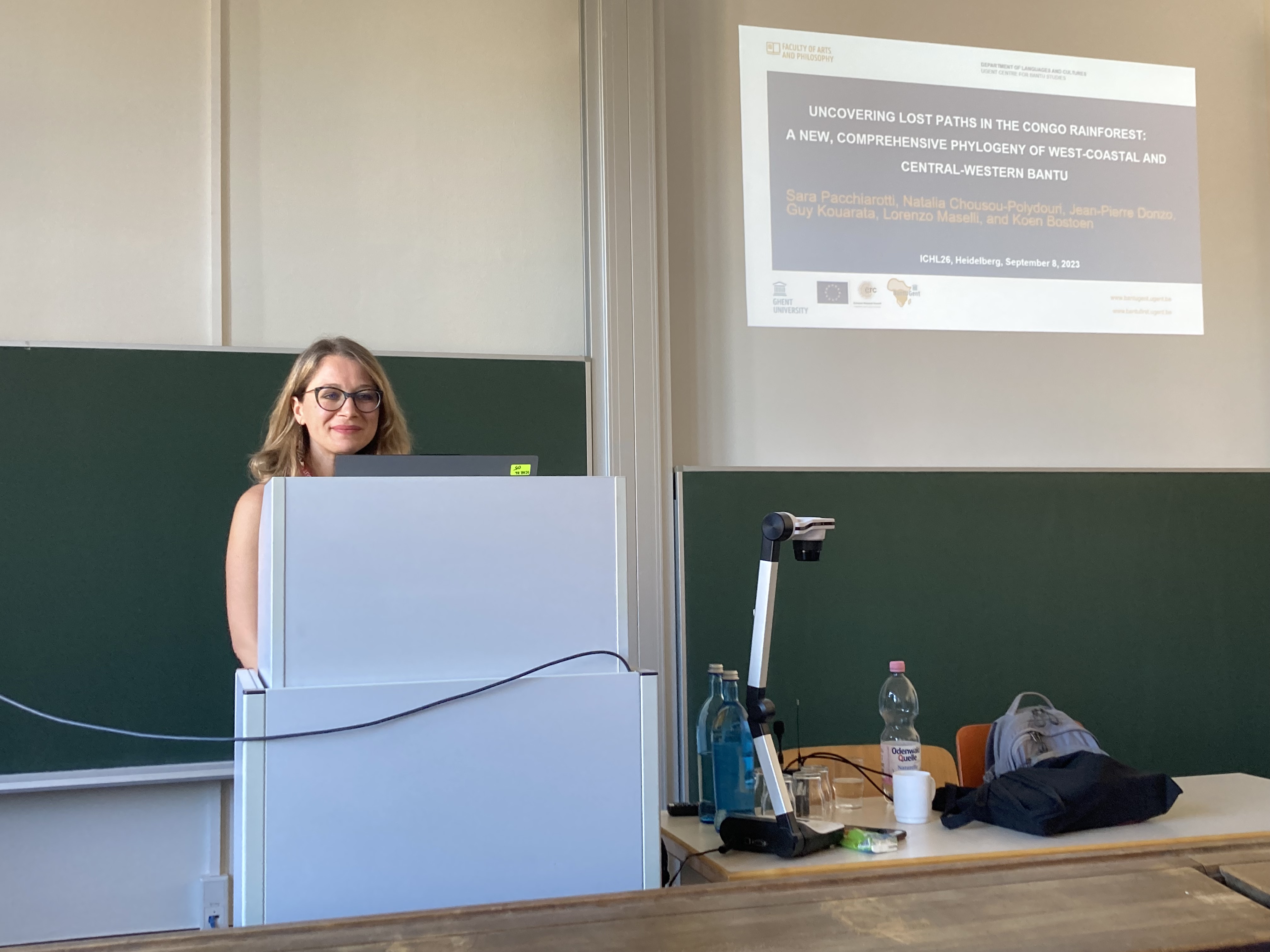
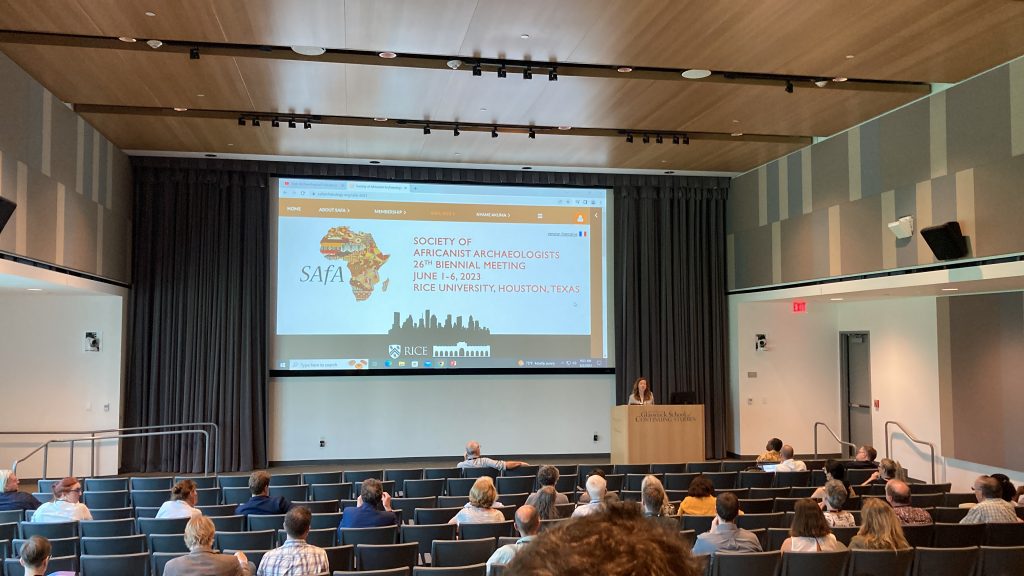
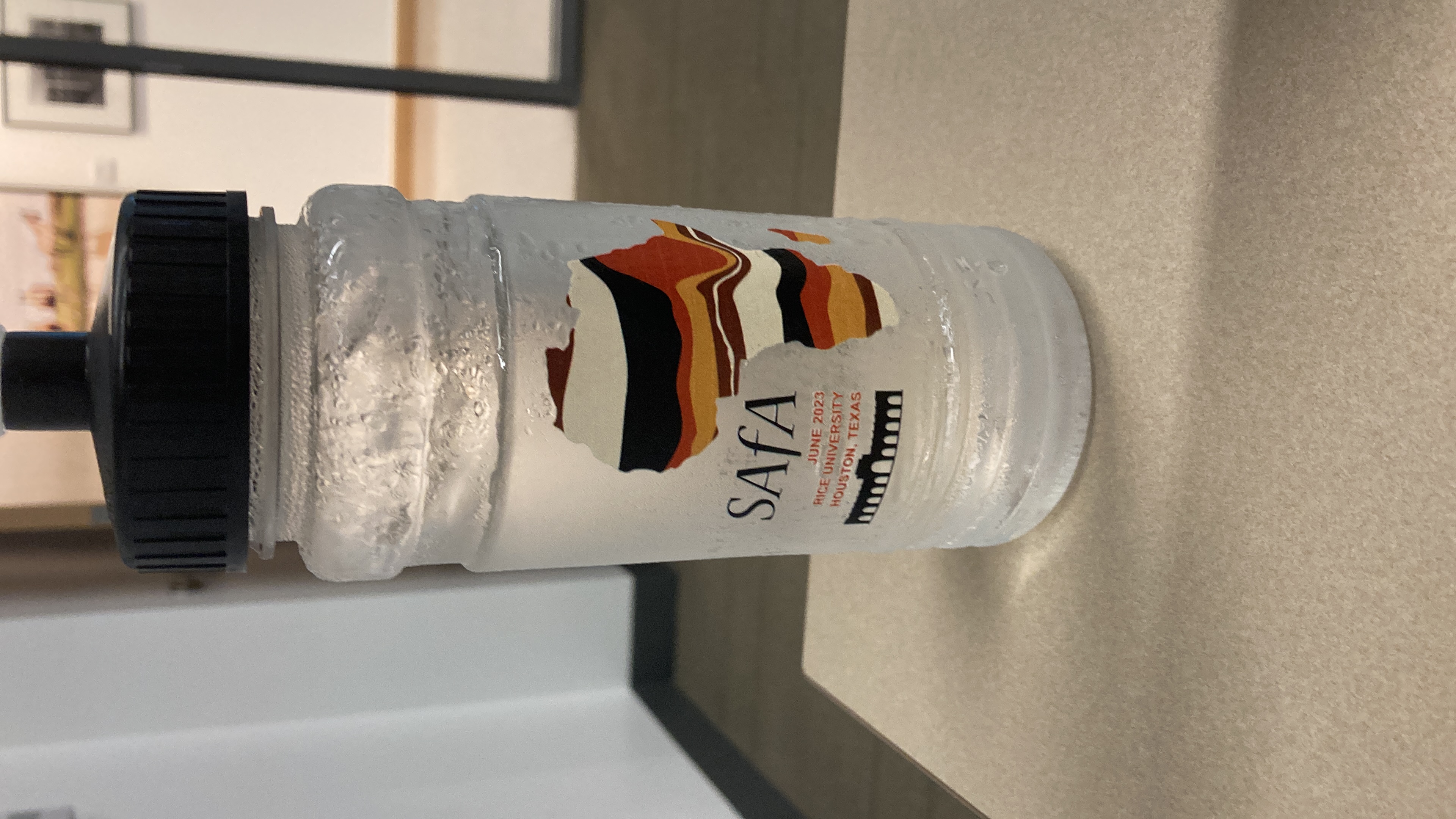
The BantuFirst project presented several papers at the 26th Biennial Meeting of the Society of Africanist Archaeologists which took place at Rice University (Houston), June 1-6, 2023.
Peter Coutros (BantUGent) and Jessamy Doman (BantUGent) had more papers on West African archaeology.
Alexa Höhn, Susan K. McIntosh, Alioune Dème, Peter Coutros, Cultured landscapes on the river. First insights from the Cubalel, Walaldé & Dialowalli charcoal assemblages.

For more info, check here.
Congratulations to Sebastian Dom (BantUGent) for obtaining a FWO senior postdoctoral fellowship for the research project titled “A historiography of Kikongo language studies and management (1624-1960)” under the supervision of Prof. Michael Meeuwis! Sebastian obtained his PhD at Ghent University in 2018 with a FWO-funded dissertation titled “Bantu verbal derivation and tense/aspect from a historical-comparative perspective: the Kikongo Language Cluster and beyond”. After a postdoctoral fellowship at the University of Gothenburg in Sweden, where he worked in a project on valency-decreasing alternations in East Ruvu Bantu languages from Tanzania, BantUGent welcomes him back at the alma mater to continue his research on Kikongo. His research focuses on verbal morphology, morphosemantics and morphosyntax in Bantu languages, and more specifically on tense/aspect and valency, from a descriptive, comparative and historical perspective.

From March 24 until June 27 Prof. Igor Matonda (UNIKIN) is on a BantuFirst-funded research leave at BantUGent. Apart from consulting and exchanging with colleagues within our research group , the main goals of his stay are to
For more info, check here.
On April 28, 2023, the Saint Augustin University of Kinshasa (USAKIN) will present a book titled “Promotion des langues locales et construction des identités culturelles” [Promotion of local languages and construction of cultural identities]. It consists of a compilation of chapters in honor of Professor Damase Ndembe Nsasi, Congolese priest and linguist.
The celebration and presentation can be watched again on Youtube (first part = holy mass; second part)
More information can be found here (in French).
On April 3 2023, Hilde Gunnink (BantUGent) presents a talk titled “2000 years of Bantu-Khoisan contact in Southern Africa: linguistic traces of interactions between hunter-gatherers and food-producers“ during a workshop on Past interactions in Southern Africa. For more info, see here.
This book is about reconstructing the grammar of Proto-Bantu, the ancestral language at the origin of current-day Bantu languages. While Bantu is a low-level branch of Niger-Congo, the world’s biggest phylum, it is still Africa’s biggest language family. This edited volume attempts to retrieve the phonology, morphology and syntax used by the earliest Bantu speakers to communicate with each other, discusses methods to do so, and looks at issues raised by these academic endeavours. It is a collective effort involving a fine mix of junior and senior scholars representing several generations of expert historical-comparative Bantu research. It is the first systematic approach to Proto-Bantu grammar since Meeussen’s Bantu Grammatical Reconstructions (1967). Based on new bodies of evidence from the last five decades, most notably from northwestern Bantu languages, this book considerably transforms our understanding of Proto-Bantu grammar and offers new methodological approaches to Bantu grammatical reconstruction.
https://langsci-press.org/catalog/book/373